
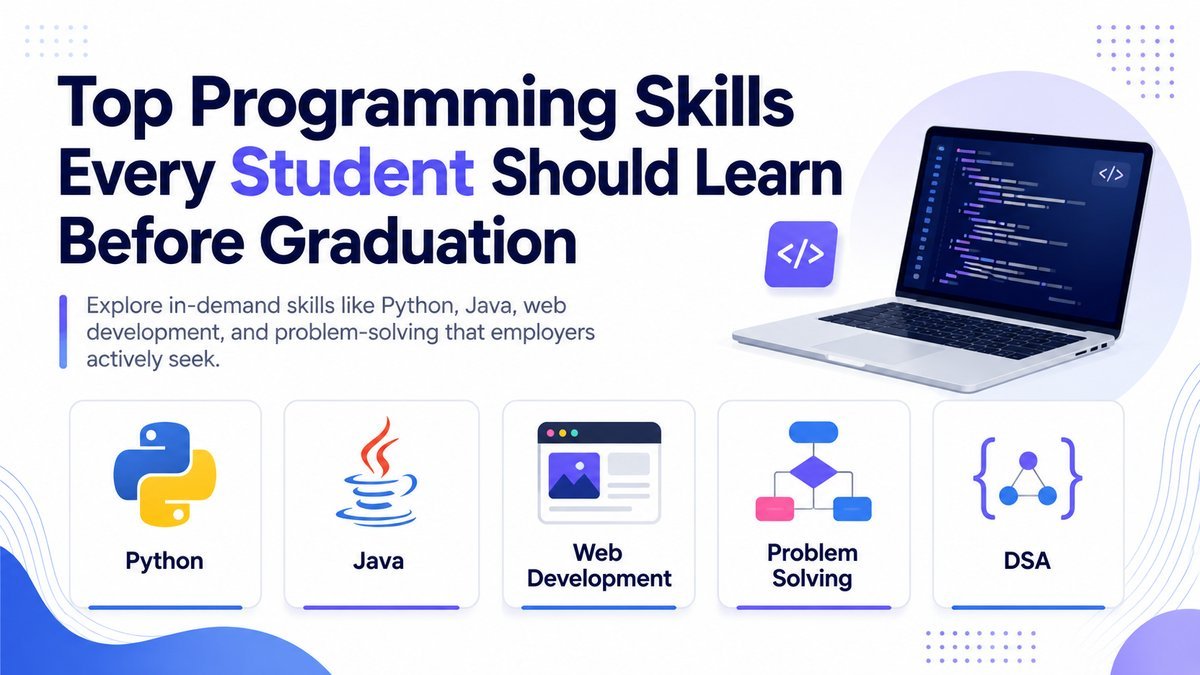
The Essential Technical Skills That Help Students Become Industry-Ready and Secure Better Career Opportunities
The technology industry is evolving rapidly, and employers today expect graduates to possess more than just academic knowledge. Companies are looking for candidates who can solve problems, write efficient code, build applications, collaborate with teams, and adapt to new technologies.
While programming languages and frameworks continue to evolve, certain programming skills remain consistently valuable across industries.
Students who develop these skills before graduation significantly improve their chances of securing internships, placements, freelance projects, and full-time software engineering roles.
Whether your goal is software development, data analytics, artificial intelligence, cybersecurity, or cloud computing, mastering the right programming skills can create a strong foundation for long-term career success.
Why Programming Skills Matter More Than Ever
Modern businesses rely heavily on software and digital solutions.
Organizations need professionals who can:
- Build Applications
- Automate Processes
- Analyze Data
- Develop APIs
- Create User Experiences
- Solve Business Problems
Programming is no longer limited to software companies. Almost every industry today requires technology professionals with strong coding and problem-solving abilities.
Skill #1: Python Programming
Python remains one of the most popular and versatile programming languages in the world.
Students can use Python for:
- Web Development
- Data Analytics
- Artificial Intelligence
- Machine Learning
- Automation
- Cybersecurity
Why Employers Value Python:
✔ Easy to Learn
✔ Huge Industry Adoption
✔ Strong AI & Data Science Ecosystem
✔ Excellent Career Opportunities
Python is often considered one of the best first programming languages for students.
Skill #2: Java Programming
Java continues to dominate enterprise software development.
Large organizations use Java for:
- Banking Applications
- E-Commerce Platforms
- Enterprise Software
- Cloud-Based Systems
Why Learn Java:
- Strong Object-Oriented Programming Concepts
- Enterprise-Level Applications
- High Demand in Job Markets
- Excellent Backend Development Opportunities
Java remains one of the most valuable languages for long-term software engineering careers.
Skill #3: Problem Solving & Logical Thinking
Many recruiters care more about problem-solving ability than specific programming languages.
Students should learn:
- Algorithm Design
- Logical Thinking
- Analytical Reasoning
- Optimization Techniques
Problem-solving skills help developers:
- Write Better Code
- Debug Faster
- Perform Well in Interviews
This skill remains valuable regardless of technology trends.
Skill #4: Data Structures & Algorithms (DSA)
Data Structures and Algorithms form the foundation of software engineering.
Important Topics Include:
- Arrays
- Linked Lists
- Stacks
- Queues
- Trees
- Graphs
- Sorting Algorithms
- Searching Algorithms
Benefits:
- Strong Interview Preparation
- Better Code Performance
- Improved Problem Solving
DSA knowledge is highly valued by technology companies.
Skill #5: Web Development
Every developer should understand how websites and web applications work.
Key Technologies:
Frontend
- HTML
- CSS
- JavaScript
Backend
- Node.js
- Java
- Python
- PHP
Web development skills open opportunities across startups, enterprises, and freelance projects.
Skill #6: Database Management
Software applications depend on data.
Students should understand:
- SQL
- Database Design
- Query Optimization
- Relationships
Popular Databases:
- MySQL
- PostgreSQL
- MongoDB
Database skills are essential for backend development and data-driven applications.
Skill #7: Version Control with Git & GitHub
Professional developers use Git daily.
Students should learn:
- Repositories
- Branching
- Merging
- Pull Requests
- Collaboration Workflows
Benefits:
- Team Collaboration
- Project Management
- Portfolio Development
GitHub profiles often help recruiters evaluate technical candidates.
Skill #8: API Development & Integration
Modern applications communicate using APIs.
Students should learn:
- REST APIs
- JSON
- HTTP Methods
- Authentication
API skills are important for:
- Web Applications
- Mobile Apps
- Cloud Services
- AI Integrations
Skill #9: Object-Oriented Programming (OOP)
OOP is a fundamental software engineering concept.
Key Concepts:
- Classes
- Objects
- Inheritance
- Polymorphism
- Encapsulation
Languages such as Java, Python, and C++ use OOP extensively.
Understanding OOP helps students build scalable applications.
Skill #10: Basic Cloud Computing
Cloud platforms are becoming standard across industries.
Students should understand:
- Cloud Concepts
- Hosting
- Storage
- Deployment
Popular Platforms:
- AWS
- Microsoft Azure
- Google Cloud
Cloud knowledge significantly improves employability.
Skill #11: Debugging Skills
Writing code is only part of software development.
Students must learn:
- Error Analysis
- Log Reading
- Root Cause Identification
- Troubleshooting
Debugging skills help developers solve real-world challenges efficiently.
Skill #12: Software Development Projects
Projects help students apply everything they learn.
Examples:
- Portfolio Websites
- E-Commerce Applications
- Student Management Systems
- AI Chatbots
- Data Analytics Dashboards
Projects demonstrate practical abilities to recruiters.
Skill #13: Basic Cybersecurity Awareness
Every developer should understand:
- Authentication
- Authorization
- Password Security
- Data Protection
Security awareness helps build safer applications.
Skill #14: Communication Skills
Technical skills alone are not enough.
Students should improve:
- Technical Communication
- Team Collaboration
- Presentation Skills
- Documentation Writing
Strong communication improves workplace performance.
Skill #15: Learning How to Learn
Technology changes constantly.
Students should develop habits such as:
- Reading Documentation
- Exploring New Technologies
- Building Projects
- Continuous Learning
Adaptability is one of the most valuable career skills.
Skills Employers Actively Look For
Recruiters often seek candidates who possess:
✅ Programming Knowledge
✅ Problem-Solving Ability
✅ Project Experience
✅ Database Skills
✅ Git & GitHub Experience
✅ Communication Skills
✅ Team Collaboration
A balanced skill set increases career opportunities.
Common Mistakes Students Make
Learning Only Theory
Practical application is essential.
Avoiding Projects
Projects strengthen understanding.
Ignoring Problem Solving
DSA and logical thinking remain important.
Learning Too Many Languages
Focus on mastering fundamentals first.
Neglecting GitHub
A strong portfolio improves visibility.
How Students Can Start Today
Learn One Core Language
Python or Java are excellent choices.
Practice Coding Daily
Consistency matters.
Build Projects
Apply knowledge practically.
Learn Git & GitHub
Showcase your work.
Solve DSA Problems
Improve analytical skills.
Explore Web Development
Build real-world applications.
These habits create strong foundations for successful careers.
Future of Programming Careers
As AI tools become more common, employers will increasingly value developers who can:
- Solve Problems
- Understand Systems
- Build Products
- Collaborate with Teams
Programming remains a valuable skill, but combining it with practical experience and problem-solving ability creates the strongest career opportunities.
Frequently Asked Questions
Which programming language should students learn first?
Python and Java are both excellent choices depending on career goals.
Is DSA important for placements?
Yes. Many companies assess problem-solving and algorithmic thinking during interviews.
Do students need projects?
Absolutely. Projects demonstrate practical skills and improve employability.
Is web development still in demand?
Yes. Web applications remain essential across industries.
Conclusion
The most successful students graduate with more than academic knowledge. They develop practical programming skills, problem-solving abilities, project experience, and the confidence to build real-world applications. Learning Python, Java, web development, databases, Git, APIs, and DSA provides a strong foundation for software engineering and technology careers.
Students who start early, build projects consistently, and focus on practical implementation position themselves for greater success in internships, placements, and long-term professional growth.
CadMate India helps students develop industry-relevant programming skills through practical learning, project-based training, and career-focused technical education.