
How Hands-On Learning is Becoming the Key to Career Success in the Modern Technology Industry
The technology industry is evolving at an unprecedented pace. New programming languages, cloud platforms, artificial intelligence tools, cybersecurity frameworks, and software development methodologies are transforming how businesses operate.
As a result, employers are no longer looking only for candidates with theoretical knowledge. They want professionals who can apply their skills in real-world situations from day one.
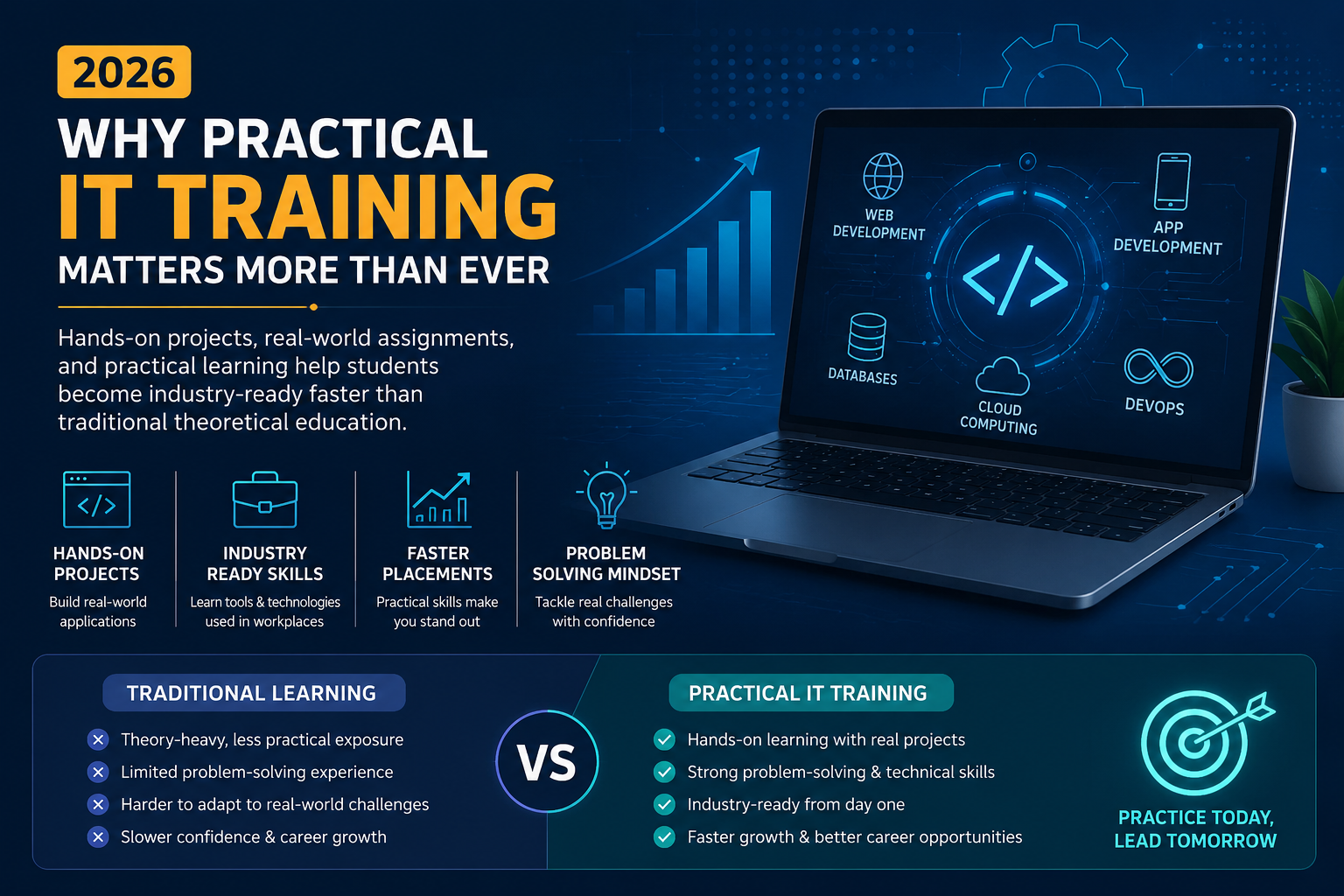
This is why practical IT training has become more important than ever in 2026.
Students who work on live projects, solve real business problems, build applications, analyze data, and gain hands-on experience are often better prepared for the workplace than those who focus only on textbooks and theoretical concepts.
The modern IT industry rewards skills, execution, and problem-solving ability. Practical learning helps bridge the gap between education and employment, making students industry-ready faster.
The Changing Expectations of Employers
A decade ago, employers were often willing to spend months training fresh graduates.
Today, businesses operate in highly competitive environments and prefer candidates who can contribute quickly.
Recruiters increasingly look for:
- Practical Skills
- Project Experience
- Problem-Solving Ability
- Technical Understanding
- Team Collaboration Skills
Employers want proof that candidates can apply their knowledge, not just discuss it.
The Problem with Traditional Learning
Many educational programs still focus heavily on:
- Theory
- Examinations
- Memorization
- Classroom Lectures
While theoretical knowledge is important, it often fails to answer critical questions such as:
- How is software built in the real world?
- How do teams collaborate?
- How are applications deployed?
- How do businesses use technology?
Without practical exposure, students may struggle during interviews and workplace transitions.
What is Practical IT Training?
Practical IT training focuses on learning through implementation rather than memorization.
Students gain experience through:
- Real Projects
- Hands-On Labs
- Industry Assignments
- Case Studies
- Team-Based Development
- Simulated Business Scenarios
The goal is to develop confidence and real-world skills.
Why Hands-On Learning Works Better
Research and industry experience consistently show that people learn more effectively when they actively practice what they study.
Practical learning helps students:
- Retain Knowledge Longer
- Develop Problem-Solving Skills
- Improve Confidence
- Build Portfolios
- Understand Industry Workflows
Learning by doing creates deeper understanding than learning by observation alone.
Industry Skills Cannot Be Learned Through Theory Alone
Many essential IT skills require hands-on practice.
Examples include:
Programming
Writing real applications.
Web Development
Building and deploying websites.
Data Analytics
Analyzing business datasets.
Cybersecurity
Identifying vulnerabilities.
Cloud Computing
Deploying solutions on cloud platforms.
Artificial Intelligence
Training and integrating AI models.
These skills improve through experience.
The Importance of Real Projects
Projects provide students with opportunities to:
- Apply Knowledge
- Solve Problems
- Build Portfolios
- Demonstrate Skills
A completed project often teaches more than weeks of theoretical study.
Projects also provide tangible evidence of a student’s capabilities during interviews.
Practical Training Builds Confidence
Many students struggle during interviews because they lack practical experience.
Hands-on training improves confidence by allowing students to:
- Build Applications
- Solve Technical Challenges
- Work with Tools
- Present Solutions
Confidence often comes from experience.
Learning Industry Workflows
Professional software development involves much more than coding.
Students should understand:
- Git & GitHub
- Agile Development
- Testing
- Deployment
- Team Collaboration
Practical training introduces these workflows early.
Why Recruiters Prefer Project Experience
Recruiters often ask:
- What projects have you built?
- What challenges did you solve?
- What technologies did you use?
Projects demonstrate initiative and practical capability.
They help candidates stand out in competitive job markets.
Practical Training Improves Problem-Solving Skills
Real-world projects introduce challenges such as:
- Debugging Errors
- Performance Issues
- Database Problems
- API Integrations
Students learn how to think critically and solve problems independently.
These skills are highly valued by employers.
The Rise of AI Makes Practical Skills Even More Important
Artificial Intelligence can help generate code and automate repetitive tasks.
However, employers still need professionals who can:
- Understand Requirements
- Solve Problems
- Design Systems
- Make Decisions
Practical training develops these abilities.
Portfolio Development Through Practical Learning
Students who complete projects can build professional portfolios showcasing:
- Websites
- Applications
- Dashboards
- Data Analysis Projects
- AI Solutions
Portfolios often have a greater impact than certificates alone.
Teamwork and Communication
Modern IT projects involve collaboration.
Practical training helps students develop:
- Communication Skills
- Teamwork
- Leadership
- Project Management
These skills are essential for workplace success.
Practical Learning Across IT Domains
Software Development
Build applications and APIs.
Data Analytics
Analyze and visualize data.
Digital Marketing
Run campaigns and measure results.
Artificial Intelligence
Develop AI-powered solutions.
Cloud Computing
Deploy scalable applications.
Every field benefits from hands-on experience.
Common Mistakes Students Make
Focusing Only on Theory
Knowledge remains incomplete without application.
Collecting Certificates
Skills matter more than certificate counts.
Avoiding Projects
Projects accelerate learning.
Ignoring Industry Tools
Modern workflows require practical tool usage.
Waiting Until Graduation
Practical experience should start early.
Avoiding these mistakes improves career readiness.
Why Practical Training Leads to Better Job Opportunities
Students with practical experience often:
- Perform Better in Interviews
- Build Stronger Portfolios
- Demonstrate Confidence
- Adapt Faster to Workplace Environments
These advantages improve employability.
Future of IT Education
The future of technology education is increasingly focused on:
- Project-Based Learning
- Industry Simulations
- Practical Assessments
- Skill Demonstrations
Employers care less about what students memorized and more about what they can accomplish.
Conclusion
Practical IT training matters more than ever in 2026 because employers increasingly seek professionals who can apply their knowledge in real-world situations. Hands-on projects, industry assignments, teamwork, and practical problem-solving help students become industry-ready faster than traditional theoretical learning alone.
The most successful students combine strong fundamentals with practical experience. By building projects, solving real challenges, and understanding industry workflows, they position themselves for stronger careers and greater opportunities in the rapidly evolving technology landscape.
CadMate India believes that learning should go beyond classrooms and textbooks. Practical experience is the foundation of true technical expertise and long-term career success.