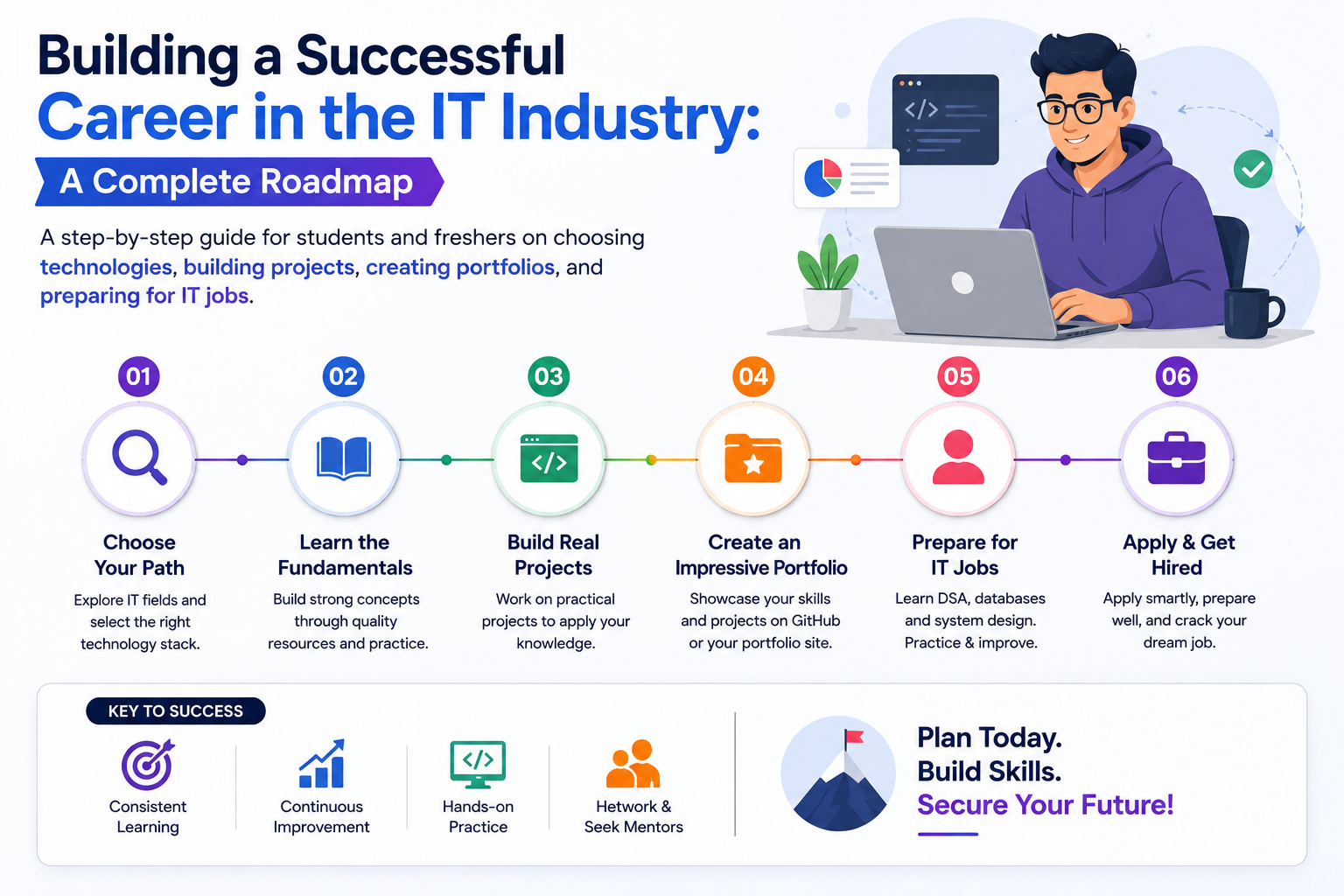
A Step-by-Step Guide for Students and Freshers to Build Skills, Gain Experience, and Secure IT Jobs
The Information Technology (IT) industry continues to be one of the most dynamic and rewarding career fields in the world. From software development and data science to cloud computing, cybersecurity, artificial intelligence, and digital marketing, the industry offers countless opportunities for growth and innovation.
However, many students and fresh graduates face a common challenge:
“How do I start my IT career and become job-ready?”
With hundreds of programming languages, frameworks, certifications, and career paths available, it is easy to feel overwhelmed.
The good news is that building a successful IT career does not require learning everything at once. What matters most is following a structured roadmap, developing practical skills, building projects, and continuously improving your knowledge.
This guide provides a complete roadmap to help students and freshers navigate their journey toward a successful IT career.
Why the IT Industry Offers Excellent Career Opportunities
The IT sector powers nearly every industry today.
Organizations rely on technology for:
- Business Operations
- Communication
- Data Analysis
- Automation
- Customer Experience
- Product Development
As digital transformation continues, demand for skilled technology professionals remains strong.
Benefits of IT Careers include:
- High Growth Potential
- Diverse Career Options
- Global Opportunities
- Remote Work Possibilities
- Continuous Learning
- Competitive Salaries
Step 1: Understand the Different IT Career Paths
Before learning technologies, students should understand available career options.
Popular IT career paths include:
Software Development
Building websites, applications, and software systems.
Full Stack Development
Working on frontend, backend, databases, and deployment.
Data Science & Analytics
Analyzing data and generating insights.
Artificial Intelligence & Machine Learning
Developing intelligent systems.
Cloud Computing
Managing cloud infrastructure and services.
Cybersecurity
Protecting systems and networks.
UI/UX Design
Designing digital experiences.
Digital Marketing
Driving online business growth.
Choosing a career path helps create a focused learning strategy.
Step 2: Build Strong Technical Fundamentals
Strong fundamentals remain valuable regardless of technological changes.
Students should learn:
Programming Basics
- Variables
- Loops
- Functions
- Conditions
Problem Solving
- Logical Thinking
- Algorithm Design
Data Structures
- Arrays
- Linked Lists
- Stacks
- Queues
- Trees
Databases
- SQL Basics
- Data Management
Strong foundations make future learning easier.
Step 3: Choose a Core Technology Stack
Rather than learning everything, students should focus on one primary path.
For Software Development
Learn:
- Java
- Spring Boot
- SQL
For Full Stack Development
Learn:
- HTML
- CSS
- JavaScript
- React
- Node.js
- Databases
For Data Science
Learn:
- Python
- SQL
- Power BI
- Machine Learning
For AI
Learn:
- Python
- Machine Learning
- Generative AI
Focused learning produces better results than scattered learning.
Step 4: Learn Industry-Relevant Tools
Professional environments use specialized tools.
Examples include:
Development Tools
- Git
- GitHub
- VS Code
Collaboration Tools
- Jira
- Trello
Cloud Platforms
- AWS
- Azure
Understanding these tools improves workplace readiness.
Step 5: Build Real Projects
Projects are one of the most important parts of career preparation.
Projects help students:
- Apply Knowledge
- Solve Problems
- Build Confidence
- Create Portfolios
Examples include:
Software Projects
- Student Management Systems
- E-Commerce Websites
- Inventory Applications
Data Projects
- Dashboards
- Business Reports
- Analytics Solutions
AI Projects
- Chatbots
- Recommendation Systems
- Predictive Models
Projects demonstrate practical capabilities to employers.
Step 6: Create a Professional Portfolio
A portfolio showcases your work.
Include:
- Project Descriptions
- Screenshots
- GitHub Links
- Technologies Used
- Problem Statements
A strong portfolio helps recruiters evaluate your skills.
Step 7: Build an Effective GitHub Profile
GitHub has become an important platform for developers.
Students should:
- Upload Projects
- Maintain Clean Repositories
- Write Documentation
- Track Contributions
A well-maintained GitHub profile strengthens professional credibility.
Step 8: Gain Internship Experience
Internships provide exposure to:
- Real Work Environments
- Team Collaboration
- Industry Practices
Benefits include:
- Practical Experience
- Networking Opportunities
- Improved Employability
Internships often lead to full-time job offers.
Step 9: Learn Communication Skills
Technical knowledge alone is not enough.
Students should improve:
- Verbal Communication
- Written Communication
- Presentation Skills
- Team Collaboration
Communication skills are essential for career growth.
Step 10: Understand Software Development Workflows
Professional teams use structured workflows.
Students should learn:
- Agile Methodology
- Scrum Practices
- Version Control
- Testing Processes
Understanding workflows improves workplace adaptation.
Step 11: Prepare for Technical Interviews
Interview preparation should include:
Programming
Practice coding regularly.
Data Structures & Algorithms
Solve problem-solving questions.
Technical Concepts
Review fundamentals.
Projects
Be prepared to explain project decisions and challenges.
Strong preparation improves confidence.
Step 12: Build a Professional LinkedIn Profile
LinkedIn helps students:
- Connect with Recruiters
- Showcase Skills
- Share Projects
- Build Professional Networks
An optimized profile increases visibility.
Step 13: Stay Updated with Industry Trends
Technology evolves continuously.
Students should follow developments in:
- Artificial Intelligence
- Cloud Computing
- Cybersecurity
- Software Engineering
- Data Science
Continuous learning remains essential.
Step 14: Develop a Problem-Solving Mindset
Successful IT professionals focus on solving business problems rather than simply writing code.
Students should learn to:
- Analyze Challenges
- Design Solutions
- Think Systematically
Problem-solving remains one of the most valuable professional skills.
Step 15: Never Stop Learning
The IT industry rewards adaptability.
Professionals should continuously:
- Learn New Technologies
- Build Projects
- Improve Skills
- Explore Emerging Trends
Lifelong learning creates long-term career success.
Common Mistakes Students Make
Learning Too Many Technologies
Focus on one path initially.
Avoiding Projects
Projects are critical for employability.
Ignoring Communication Skills
Professional success requires collaboration.
Focusing Only on Certificates
Practical experience matters more.
Waiting Until Graduation
Career preparation should begin early.
Avoiding these mistakes accelerates growth.
Skills Employers Value Most
Recruiters often seek:
✅ Technical Skills
✅ Problem Solving
✅ Project Experience
✅ Team Collaboration
✅ Communication Skills
✅ Adaptability
A balanced skill set improves career prospects.
A Sample Roadmap for Freshers
Months 1–3
Learn programming fundamentals.
Months 4–6
Study databases and problem solving.
Months 7–9
Build projects.
Months 10–12
Create portfolios and prepare for interviews.
This structured approach helps students progress consistently.
Future of IT Careers
The future of IT will continue to be shaped by:
- Artificial Intelligence
- Cloud Computing
- Data Analytics
- Cybersecurity
- Automation
Professionals who combine strong fundamentals with practical skills will remain highly valuable.
Frequently Asked Questions
Is IT a good career in 2026?
Yes. Demand for skilled technology professionals continues to grow globally.
Do projects matter more than certifications?
Projects often provide stronger evidence of practical abilities.
Is GitHub important?
Yes. It helps showcase technical skills and project experience.
Can beginners start without prior coding knowledge?
Absolutely. Consistent learning and practice are the keys to success.
Conclusion
Building a successful career in the IT industry requires more than learning programming languages. Students must develop strong fundamentals, choose a clear career path, build real-world projects, create professional portfolios, gain practical experience, and continuously improve their skills.
The most successful professionals focus on solving problems, building solutions, and adapting to technological changes. By following a structured roadmap and investing in practical learning, students and freshers can significantly improve their employability and build rewarding careers in the ever-growing IT industry.
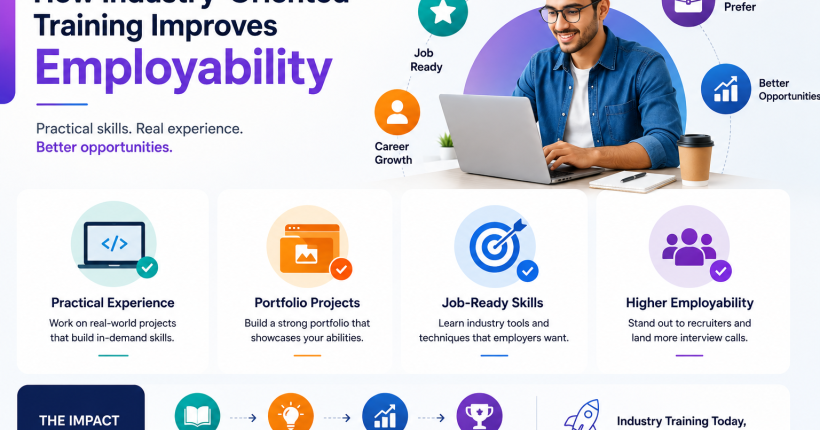
CadMate India supports aspiring technology professionals through industry-oriented training, project-based learning, and practical skill development designed to prepare students for successful careers in the modern IT industry.