Why Practical Experience, Portfolio Projects, and Job-Ready Skills Matter More Than Ever
The job market is becoming increasingly competitive. Every year, thousands of students graduate with degrees in technology, engineering, business, and other disciplines. However, many employers continue to report a significant gap between academic qualifications and workplace readiness.
Organizations are no longer looking only for candidates who possess theoretical knowledge. They seek professionals who can contribute from day one, solve real-world problems, work with industry tools, and adapt quickly to professional environments.
This is where industry-oriented training plays a crucial role.
Industry-oriented training focuses on practical skills, real-world projects, modern technologies, and workplace expectations. It helps students bridge the gap between education and employment while improving confidence, technical competence, and overall employability.
In today’s rapidly evolving job market, industry-oriented learning has become one of the most effective ways to prepare for successful careers.
What is Industry-Oriented Training?
Industry-oriented training is a learning approach designed to align education with current industry requirements.
Instead of focusing only on theory, it emphasizes:
- Practical Skills
- Real-World Projects
- Industry Tools
- Workplace Scenarios
- Professional Workflows
- Job Readiness
The goal is to prepare students for actual professional responsibilities rather than examinations alone.
Why Traditional Education Alone Is Often Not Enough
Most academic programs provide strong theoretical foundations.
Students learn:
- Concepts
- Principles
- Methodologies
- Academic Frameworks
However, many graduates face challenges because they have limited exposure to:
- Industry Tools
- Real Projects
- Team Collaboration
- Client Requirements
- Deployment Environments
This creates a gap between classroom learning and workplace expectations.
The Growing Demand for Job-Ready Professionals
Modern businesses operate in fast-paced environments.
Employers prefer candidates who can:
- Solve Problems
- Work Independently
- Collaborate with Teams
- Use Industry Tools
- Deliver Results
Organizations often seek employees who require minimal onboarding and can contribute quickly.
Industry-oriented training helps develop these capabilities.
Practical Experience Improves Confidence
One of the biggest benefits of industry-focused learning is confidence.
Students who work on real projects gain experience in:
- Building Applications
- Solving Technical Challenges
- Presenting Solutions
- Meeting Deadlines
Practical exposure reduces fear and uncertainty during interviews and professional work.
Why Employers Value Practical Skills
Recruiters frequently evaluate candidates based on:
- Technical Competence
- Project Experience
- Problem-Solving Ability
- Adaptability
Practical skills demonstrate that a candidate can apply knowledge effectively.
Employers often prefer candidates who can show evidence of real-world implementation.
Portfolio Projects Create Strong First Impressions
A portfolio serves as proof of a student’s abilities.
Portfolio projects demonstrate:
- Technical Skills
- Creativity
- Problem Solving
- Project Execution
Examples include:
- Web Applications
- Data Analytics Dashboards
- Mobile Apps
- AI Solutions
- Business Automation Tools
Strong portfolios often differentiate candidates from competitors.
Industry-Oriented Training Develops Problem-Solving Skills
Real-world projects introduce practical challenges such as:
- Debugging Errors
- Performance Optimization
- Database Management
- API Integration
- User Experience Improvements
Students learn how to analyze issues and develop effective solutions.
Problem-solving ability remains one of the most valuable workplace skills.
Exposure to Industry Tools and Technologies
Modern organizations use a variety of professional tools.
Examples include:
Software Development
- Git & GitHub
- Docker
- Cloud Platforms
Data Analytics
- Power BI
- Tableau
- SQL
Digital Marketing
- Google Analytics
- SEO Tools
- Social Media Platforms
Industry-oriented training helps students become comfortable with these technologies.
Understanding Workplace Workflows
Professional environments involve structured processes.
Students gain exposure to:
- Agile Methodologies
- Project Management
- Code Reviews
- Team Collaboration
- Client Communication
Understanding these workflows improves workplace readiness.
Better Interview Performance
Interviewers frequently ask questions such as:
- What projects have you completed?
- What challenges did you encounter?
- How did you solve them?
Students with practical experience can provide detailed answers based on actual work.
This improves interview confidence and performance.
Improved Communication and Teamwork
Technical skills alone are not sufficient.
Industry-oriented training helps students develop:
- Communication Skills
- Presentation Skills
- Collaboration Skills
- Professional Etiquette
These abilities contribute significantly to career success.
Industry-Oriented Training Supports Multiple Career Paths
Practical learning benefits students pursuing careers in:
Software Development
Building real applications.
Data Science
Working with business data.
Artificial Intelligence
Developing intelligent systems.
Web Design
Creating responsive digital experiences.
Digital Marketing
Managing online growth strategies.
Industry-relevant skills improve opportunities across fields.
Why Certifications Alone Are Not Enough
Certifications demonstrate learning.
Projects demonstrate capability.
Employers increasingly focus on:
- What candidates can build
- How candidates solve problems
- Whether candidates can apply knowledge
Practical experience complements certifications and strengthens resumes.
The Importance of Real-World Projects
Projects help students:
- Apply Concepts
- Build Portfolios
- Understand Industry Challenges
- Demonstrate Competence
Hands-on learning creates deeper understanding than theory alone.
Industry-Oriented Training and Internship Readiness
Students with practical experience often perform better during internships because they already understand:
- Development Workflows
- Project Structures
- Team Collaboration
This enables faster adaptation and better performance.
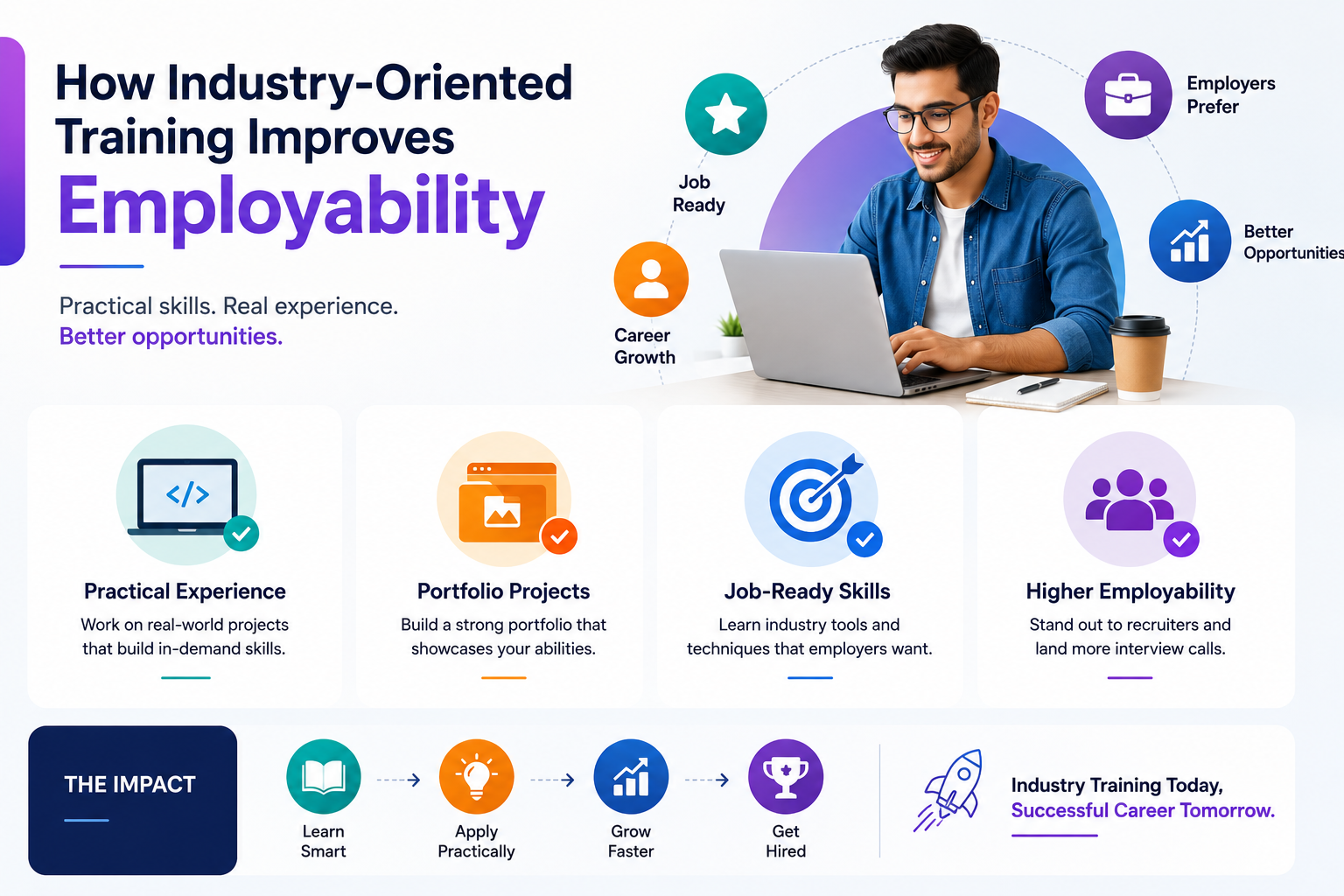
How Industry-Oriented Training Improves Employability
Students who complete industry-focused training often gain:
Technical Skills
Relevant to current job markets.
Practical Experience
Valued by employers.
Strong Portfolios
Demonstrating capabilities.
Interview Confidence
Built through real-world exposure.
Professional Readiness
Supporting faster workplace adaptation.
These factors collectively improve employability.
Common Mistakes Students Make
Focusing Only on Theory
Practical application is equally important.
Avoiding Projects
Projects build experience.
Ignoring Industry Tools
Modern workplaces rely on specialized technologies.
Waiting Until Graduation
Skill development should begin early.
Collecting Certificates Without Practice
Practical implementation remains essential.
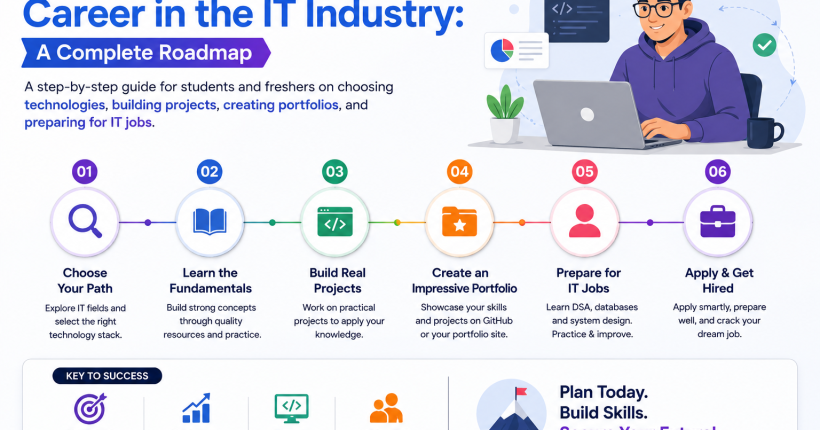
How Students Can Become More Employable
Learn Industry-Relevant Skills
Focus on current market demands.
Build Real Projects
Apply knowledge practically.
Create a Portfolio
Showcase achievements.
Participate in Internships
Gain professional exposure.
Practice Communication
Improve workplace readiness.
These steps significantly improve career prospects.
Future of Employability
As technology continues to evolve, employers will increasingly value candidates who can:
- Learn Quickly
- Solve Problems
- Adapt to Change
- Apply Knowledge
Industry-oriented training develops exactly these qualities.
Frequently Asked Questions
Does practical experience matter more than certificates?
Both are valuable, but practical experience often has a greater impact during hiring.
Why do recruiters ask about projects?
Projects demonstrate real-world skills and problem-solving abilities.
Can industry-oriented training help freshers?
Yes. It improves confidence, technical competence, and workplace readiness.
Are portfolios important?
Absolutely. Portfolios provide evidence of practical capabilities.
Conclusion
Industry-oriented training improves employability by helping students develop practical experience, technical competence, portfolio projects, and workplace-ready skills. Employers increasingly seek candidates who can apply their knowledge effectively, collaborate with teams, and solve real-world problems.
Students who focus on industry-relevant learning, hands-on projects, and practical implementation gain significant advantages in placements, internships, and long-term career growth. In today’s competitive job market, being job-ready is just as important as being academically qualified.
CadMate India helps students develop industry-ready skills through practical training, real-world projects, and career-focused learning programs designed to improve employability and professional success.